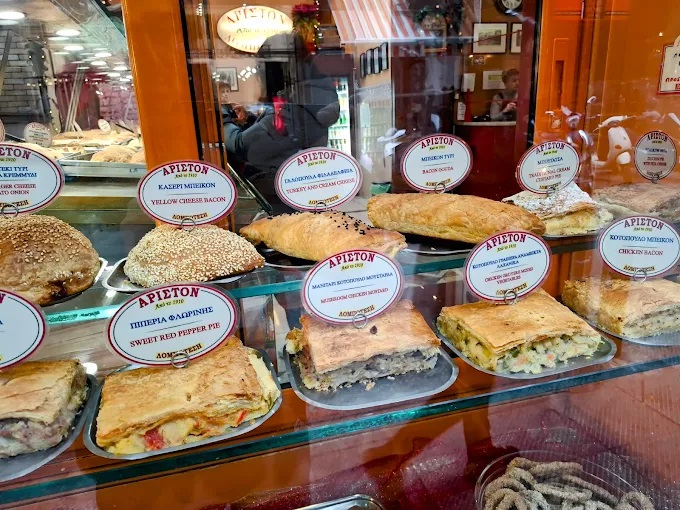
Greek pies—collectively called pites (πίτες)—are a whole universe of comfort food, regional identity, and ancient history wrapped in flaky layers of dough. They’re not just snacks; they’re a living tradition that runs from antiquity to today’s village kitchens and modern bakeries. Let’s go deep
Where Greek pies come from (a very long story, in a tasty nutshell)
Ancient roots
The idea of wrapping fillings in dough goes back to Ancient Greece. Early Greeks made simple flatbreads and filled them with cheese, herbs, honey, or meat. These weren’t “pies” in the modern phyllo-layered sense, but the concept of food wrapped in dough and baked or cooked on stone was already there.
Later, during the Byzantine Empire, Greek cooking absorbed techniques from the eastern Mediterranean. This period helped refine pastry traditions and introduced more complex fillings with spices, greens, and cheeses.
Ottoman influence & phyllo mastery
A huge turning point came during the centuries of Ottoman rule in Greece. This is when ultra-thin phyllo (filo) pastry became widespread. The skill of stretching dough paper-thin by hand turned pies into something more delicate, layered, and flaky.
Greek pites developed side-by-side with other pastries across the Ottoman world, but Greeks gave them their own identity with:
local cheeses
wild mountain greens
olive oil instead of butter (in many regions)
Orthodox fasting traditions (which shaped meatless pies)
Village food → everyday Greek staple
For centuries, pies were peasant food: cheap, filling, and perfect for farm workers and shepherds. A pie could feed a family for days. Every village had:
its own dough style
its own filling combinations
its own shape and baking method
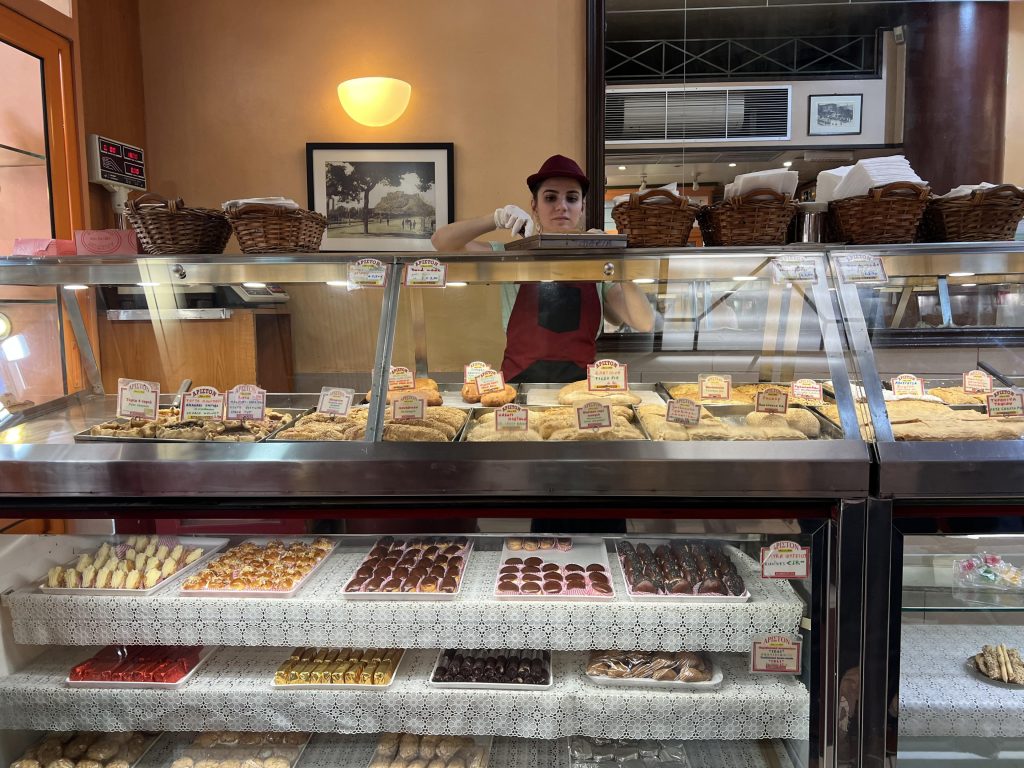
Even today, pies are a daily breakfast or lunch item you grab from a bakery—spinach pie in the morning, cheese pie at noon, meat pie for dinner. Totally normal Greek life
What makes a Greek pie a “Greek pie”?
- The dough (phyllo or rustic crust)
There are two big styles:
Phyllo pies
Super thin, crispy layers
Brushed with olive oil or butter
Light and flaky
Rustic village pies
Thicker, hand-rolled dough
Chewier and more bread-like
More filling, less delicate
Often baked in big round pans
Some villages still make phyllo by stretching the dough across a whole table with their hands. It’s low-key culinary acrobatics.
- The fillings (this is where magic happens)
Greek pies reflect:
what grows nearby
what animals people raised
religious fasting rules
seasonal availability
This is why the variety is huge.
The main kinds of Greek pies (with origins and stories)
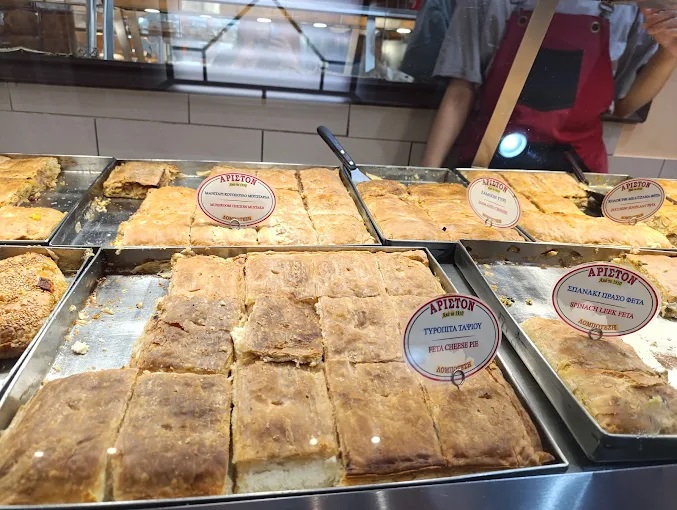
Tyropita (cheese pie)
Filling: feta, eggs, sometimes yogurt or other cheeses
Why it exists: cheese was always easier to store than meat
How it’s eaten: breakfast, snack, road-trip food
This is probably the most common Greek pie today.
Spanakopita (spinach pie)
Filling: spinach, herbs (dill, spring onion), feta
Roots: fasting traditions and mountain foraging
Wild greens were a survival food in rural Greece, so greens pies became a tradition that stuck.
Hortopita (wild greens pie)
Filling: wild herbs and bitter greens
Very old tradition: villagers used whatever the hills gave them
This is probably the closest modern pie to ancient Greek food habits.
Kreatopita (meat pie)
Filling: lamb, goat, beef, sometimes mixed with rice or bulgur
Occasions: holidays, weddings, feasts
Meat pies were celebratory—meat wasn’t everyday food historically.
Galatopita (milk custard pie)
Filling: milk, semolina, eggs, sugar
Connection to ancient desserts: milk-based sweets go back to antiquity
This one is halfway between pie and pudding. Soft, creamy, comforting.
Bougatsa
Cream or cheese pie with sugar on top, especially famous in Thessaloniki.
It shows strong Asia Minor influence, brought by Greek refugees in the 1920s.
Regional & rare pies
Every region has signature pies:
Epirus (mountain region): famous for super-thin phyllo and massive family-sized pies
Islands: pies with fish, octopus, or sweet cheese
Crete: pies with local soft cheese and honey
Many of these don’t even have famous names outside their villages.
How Greek pies “got here” culturally (not just historically)
Greek pies exist because of:
Geography
Mountains = wild greens
Islands = cheese and fish
Sheep & goats = feta and milk pies
Religion
Orthodox fasting bans meat and dairy many days of the year.
So Greeks perfected plant-based pies long before “vegan” was trendy.
Family tradition
Pie recipes were passed:
from grandmother to mother
from mother to daughter
measured by hand, not cups
Many Greek families guard their pie dough recipe like a secret spell.
Why Greek pies still matter today
Greek pies aren’t “museum food.” They’re:
daily breakfast
street food
family gathering food
comfort food
celebration food
They connect modern Greeks to:
ancient cooking habits
village life
survival cooking
hospitality culture
Offering someone a slice of pie is basically saying:
“You’re welcome here.”
The soul of Greek pies (the emotional part)
Greek pies are about:
using what you have
feeding many people with little
turning humble ingredients into something beautiful
showing care through food
About the Author