In Greece, pie-making is more than a cooking habit — it’s a ritual passed from grandmother to grandchild. Nearly every Greek household holds memories of a large baking tray set in the middle of the table, steam rising as pieces are cut and shared. Across Athens, savory pies are as common as coffee: sold warm in bakeries on nearly every corner, offered in sandwich shops, or stocked frozen in supermarkets much like pizza in the United States.
The Greek word for pie is pita (πίτα) — not to be confused with pita bread. The name usually reveals the filling. Tyropita (cheese pie), spanakopita (spinach pie), and loukanikopita (sausage baked in pastry) are staples. Even sweet varieties, like creamy bougatsa dusted with powdered sugar, hold a beloved place in bakery windows. Most are made with delicate layers of phyllo dough — paper-thin sheets whose name comes from the Greek word for “leaf.” Others rely on sturdier, more buttery pastry that offers a richer bite.
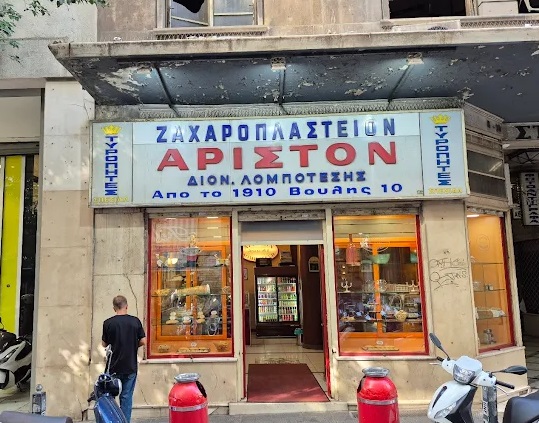
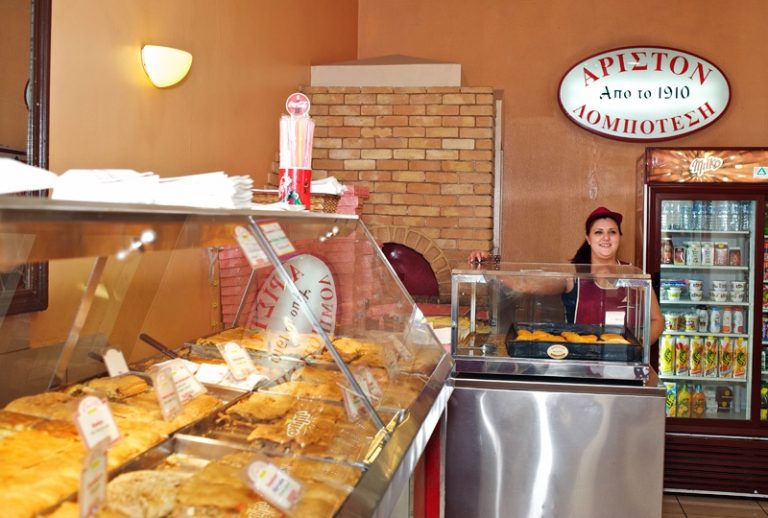
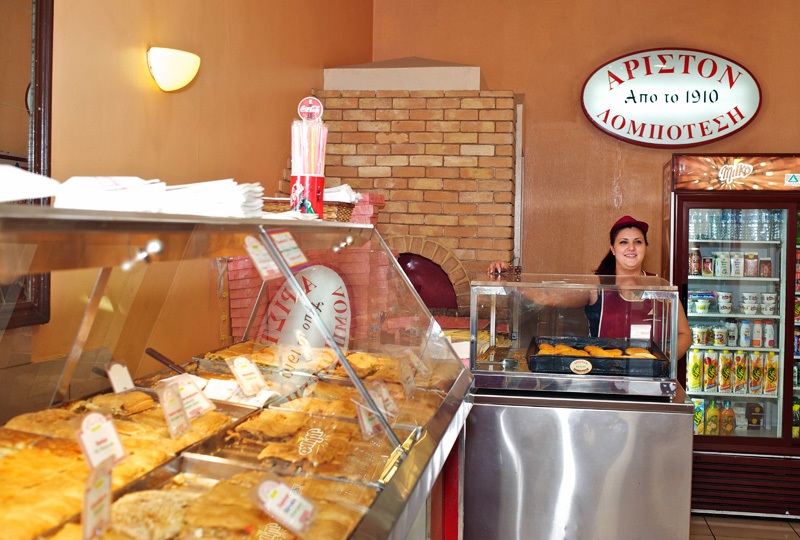
Just steps from Syntagma Square, on bustling Voulis Street, stands one of the capital’s most treasured pie shops. Established in 1910 and still run by the founding Lobotesis family, Ariston (a name that fittingly translates to “the best”) has become part of Athens’ culinary identity. Office workers on quick lunch breaks, university students, retirees in brimmed hats, parents with strollers, and shoppers escaping nearby Ermou Street all funnel through its doors from morning to afternoon.
The Famous Kourou Pies
Ariston’s signature creation is the kourou pie. These half-moon pastries sit proudly in a heated glass case like prized gems. Made with a sturdy, yogurt-and-butter-enriched dough rather than flaky phyllo, they glow faintly golden. Inside is a generous filling of feta cheese. The result is indulgent: buttery, crumbly, salty, and satisfying enough to count as a full meal. While other bakeries make kourou pies, few achieve the same balance of richness and texture that has made Ariston’s version iconic.
A Counter Full of Choices
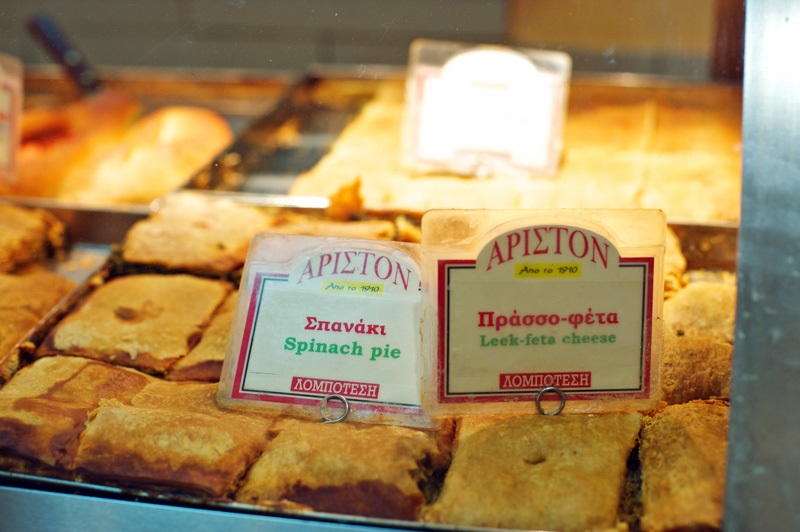
Beyond the kourou specialty, the shop offers an impressive selection — often more than fifteen varieties daily. Large metal trays line the counter, each labeled in Greek and English. These pies are cut into rectangular portions, their fillings soft and abundant, almost creamy in texture.
Flavor combinations range from feta with leek or zucchini to mushroom and sweet Florina peppers from northern Greece. There is even a hearty “farmer’s pie” packed with mixed vegetables. A standout favorite blends bacon, peppers, and cheese — a savory trio that creates a comforting, almost pizza-like flavor.
For takeaway, purchases are neatly boxed in Ariston’s signature pink cardboard packaging, stamped with its vintage logo. That simple box has traveled across Athens for generations, carried home by loyal customers who grew up on these flavors.
More than a bakery, Ariston is a living piece of Athenian food history — a place where tradition, craftsmanship, and everyday life meet in layers of golden pastry.
About the Author